

- Your cart is empty Browse Shop
Our Services
A high-yield fodder grass that keeps producing for years from one planting. High in protein for your cattle, and clean feedstock for biomass.
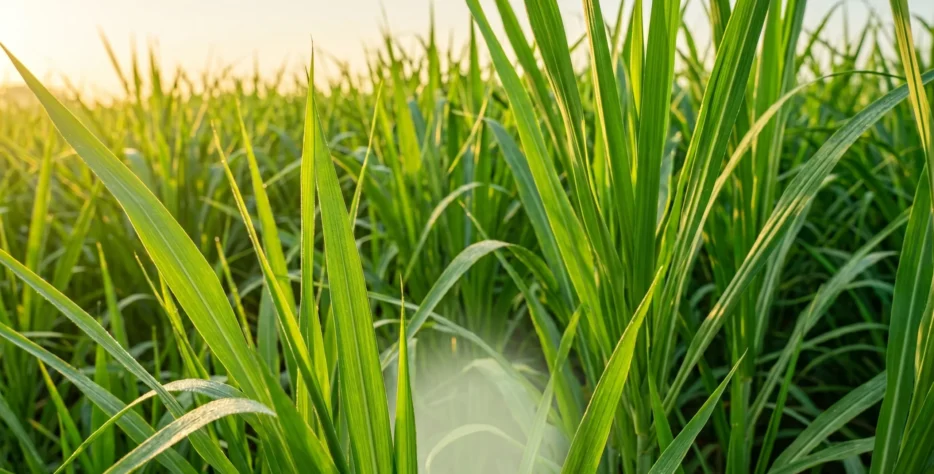
Napier Grass for Bioenergy: What Makes It Worth Considering
The search for alternatives to fossil fuels keeps circling back to biomass, and Napier Grass (also called Elephant Grass) is one of the more interesting candidates. It grows fast, yields a lot of material per acre, and doesn’t need prime farmland. Here’s what actually matters if you’re evaluating it as a feedstock.
Exceptional Biomass Yield
- 150–160 tons per acre per year. That’s considerably more than switchgrass or miscanthus.
- The plant reaches up to 15 feet tall and can be harvested 3–5 times a year.
- Once planted, you get 5–7 years of production before replanting.
Low Input, High Output
- Napier grass does fine on organic manure and treated wastewater.
- You don’t need to pour synthetic nitrogen into it.
- It also grows on marginal or degraded land that can’t support food crops, which means you’re not taking land away from food production.
Conversion Pathways: How Napier Grass Generates Energy
| Pathway | Process | End Product |
|---|---|---|
| Direct Combustion | Dried grass burned in biomass boilers | Steam → Electricity |
| Anaerobic Digestion | Fresh or ensiled grass digested by microbes | Biogas (methane) → Electricity |
| Cellulosic Ethanol | Enzymatic breakdown of cellulose | Second-generation bioethanol |
| Torrefaction | Roasted grass converted into bio-coal | High-density solid fuel |
Superior Combustion Properties
- 16–18 MJ/kg on a dry basis, which puts it in the same range as many hardwoods.
- Selected varieties have low ash and chlorine content, so you get less slagging and fouling in boilers.
- It works for direct combustion, gasification, and co-firing with coal.
What Else It Does
The root systems sequester carbon in soil while you’re harvesting the above-ground biomass for energy — so the net carbon math can actually go negative. The dense root mats also prevent erosion and filter agricultural runoff, which is a useful side benefit in areas with degraded soil.
For farmers, contract farming with guaranteed offtake creates a stable income stream. And if you’re irrigating with treated industrial effluents, your fertilizer costs drop further.
Challenges in Widescale Adoption
None of this is free of complications.
- Moisture: Napier grass is 80–85% water at harvest. You have to wilt or ensile it before it burns efficiently — that takes time and handling.
- Bulk density: It’s bulky. Without baling or pelleting, transport costs eat into your margins fast.
- Equipment: Standard farm machinery isn’t designed for stalks this thick and tall. You need mower-conditioners and balers built for the job.
What Kiran Green Energy Solutions Private Limited Does About All of This
We handle everything from the field to your plant gate. Every acre is tracked by drone, every harvest is data-scheduled, and every batch hits strict quality specs before it ships.
1. Dedicated Farming & Mechanized Plantation
- We cultivate on owned or leased land we own the feedstock pipeline, not a middleman.
- Planting is done with tractor-mounted planters.
- Precision farming using GPS has allowed for increased yields (up to 30%) with better utilization of land.
- Spacing between rows of crops is designed so that as much sunlight as possible can reach the ground and that machines can easily harvest the crops when they are ready to do so.
- We plant exclusively high-biomass Napier varieties with low ash content.
2. Irrigation Management
- Special irrigation systems that are designed specifically for use with Napier grass, and utilize scheduling based upon soil moisture sensors & timers.
- We use Waste Decomposer, organic NPK, and natural pest repellents—so we don’t have to keep buying expensive chemical fertilizers anymore.
- There is ongoing real-time monitoring of the moisture levels in order to avoid both over-watering and underwatering.
3. Regular Drone Surveying (Precision Monitoring)
- Flights take place every 10-15 days (while crops are actively growing) and weekly prior to harvest, with a 100% coverage rate on the entire acreage; there are no blank areas.
- Drone data feeds directly into our acre-wise harvest calendar.
- The result: harvest timing errors drop by over 70%, and yield goes up by as much as 25%.
Precision Agriculture Monitoring Technologies
| Parameter | Technology Used | Benefit |
|---|---|---|
| Vegetation health (NDVI) | Multispectral sensors | Detect nutrient deficiency, disease, water stress early |
| Biomass estimation | Photogrammetry + canopy height model | Predict yield 2–3 weeks before harvest |
| Moisture stress mapping | Thermal imaging | Optimize irrigation scheduling |
| Lodging detection | High-resolution RGB imagery | Prioritize harvest of fallen acres |
| Weed & pest hotspots | Spectral signature analysis | Precision spraying—reduce chemicals by 50–70% |
| Harvest readiness | Plant height + leaf senescence | Pinpoint exact 7-day harvest window per acre |
4. Optimized Manpower
- Teams are sized to the land area and harvest cycle — no more, no less.
- Roles cover supervisors, machine operators, irrigation technicians, drone pilots, data analysts, and harvest crew.
- Everyone is trained on biomass handling, equipment, drone data interpretation, and safety.
5. Mechanized Harvesting & In-Field Processing
- Fleet includes mower-conditioners, self-propelled forage harvesters, and tractor-mounted cutters.
- We run 3-5 harvests per year on 75–90 day growth windows, with drone data validating the timing for each block
6. Acre-Wise Harvest Calendar
- Every acre gets a GPS tag, soil test, and unique ID. Planting date, variety, irrigation zone, and maturity window are logged digitally.
- Planting is staggered across the total acreage so feedstock flows year-round without interruption.
- Each acre gets a 7–10 day harvest window — not before (low yield) and not after (the grass lignifies and loses value).
- The calendar isn’t static. Intervals shift based on live drone data — NDVI, biomass maps, moisture stress readings.
- All of this adds up to 15–20% more annual yield than unstructured harvesting, with consistent quality that your conversion equipment can actually rely on.
Sample Harvesting Calendar (100 Acres)
| Acre Block | Planting Date | Harvest Cycle | Harvest Window (Drone-Validated) | Yield (Tons/Acre) | End Use |
|---|---|---|---|---|---|
| Block A (1-20) |
Week 1 | Every 80 days | Jan 10-20, Apr 1-10, Jun 20-30, Sep 10-20 |
18-22 fresh / 6-8 dry |
Biogas / Combustion |
| Block B (21-40) |
Week 3 | Every 85 days | Jan 25-Feb 5, Apr 15-25, Jul 5-15, Sep 25-Oct 5 |
20-24 fresh / 7-9 dry |
Pelletization |
| Block C (41-60) |
Week 5 | Every 75 days | Feb 10-20, Apr 30-May 10, Jul 20-30, Oct 10-20 |
16-20 fresh / 6-7 dry |
Silage |
* Calendar is dynamic—intervals adjusted based on drone survey data (NDVI, biomass maps, moisture stress).
Factors Determining Harvest Timing (Drone-Monitored)
| Parameter | Target Range | Drone Method | Action if Out of Range |
|---|---|---|---|
| Plant height | 2.5–3.5 m | Photogrammetry | Harvest at 2.5m if lodged; delay if <2.0m |
| Age since harvest | 75–90 days | Field database | Never exceed 95 days (lignin increases) |
| Moisture content | 75–80% | Thermal imaging | Delay if >82% |
| NDVI | >0.75 | Multispectral | Investigate if <0.6 |
| Leaf-to-stem ratio | >40% leaves | RGB imagery | Harvest immediately if <30% |
| Lodging | <5% | Orthomosaic | Prioritize harvest if >10% |
Required Harvest Quality Standards
| Parameter | Required Standard |
|---|---|
| Moisture at baling | ≤55% (combustion) or 70-75% (silage/biogas) |
| Foreign matter | ≤2% (no stones, plastic, weeds) |
| Lignin content | ≤18% (AD) or ≤22% (combustion) |
| Ash content (dry) | ≤12% (preferably <10%) |
| Calorific value | Minimum 16 MJ/kg (dry basis) |
| Mold / rot | None; silage pH ≤4.5 |
7. Compacting
- High-density balers produce 500–800 kg bales (square or round).
- Volume drops 70–80%, which makes a real difference in per-ton freight costs and opens up longer transport distances.
8. GPS-Enabled Transport
- Dedicated fleet of tipper trucks, tractor trolley, flatbed trolley and high-volume biomass trailers.
- Real-time GPS tracking and route optimization keep fuel and transit time down.
- Deliveries are scheduled just-in-time to your plant gate.
9. Silaging for Year-Round Supply
- Covered silage bunkers, bag silos, and wrapped bales preserve organic matter through anaerobic storage.
- This keeps biogas yield and combustion quality consistent during off-seasons (monsoon, winter).
- We maintain buffer stock so supply doesn’t depend on any single harvest cycle or weather event.
Precision Agriculture Monitoring Technologies
| Parameter | Technology Used | Benefit |
|---|---|---|
| Vegetation health (NDVI) | Multispectral sensors | Detect nutrient deficiency, disease, water stress early |
| Biomass estimation | Photogrammetry + canopy height model | Predict yield 2–3 weeks before harvest |
| Moisture stress mapping | Thermal imaging | Optimize irrigation scheduling |
| Lodging detection | High-resolution RGB imagery | Prioritize harvest of fallen acres |
| Weed & pest hotspots | Spectral signature analysis | Precision spraying—reduce chemicals by 50–70% |
| Harvest readiness | Plant height + leaf senescence | Pinpoint exact 7-day harvest window per acre |
Our End-to-End Service Delivery
| Service Component | What We Deliver |
|---|---|
| Farming | End-to-end cultivation on contracted land |
| Plantation | Highly mechanized, GPS-guided, precision planting |
| Irrigation | FORROW/Drip/sprinkler with automated scheduling |
| Drone Survey | Regular (10-15 days) multispectral + thermal imaging of every acre |
| Manpower | Optimized, trained teams (incl. drone pilots & data analysts) |
| Harvesting | Mechanized mowing, windrowing, multi-cut cycles |
| Harvest Calendar | Acre-wise scheduling driven by drone data + strict quality parameters |
| Compacting | High-density baling or pelletization |
| Transport | GPS-fleet with plant gate delivery |
| Silaging | Anaerobic storage as per Plant requirement |
Why Work With Kiran Green Energy Solutions
- We own the whole chain, field to plant gate. No aggregators, no spot-market pricing.
- Drone surveys and digital farm management keep operations data-driven.
- Acre-wise harvest calendars are built to get the most out of every plot, and quality specs are enforced at every stage — not just checked at the gate.
- Staggered planting plus silaging plus a 12-month buffer means supply doesn’t break when weather does.
- We’ve been doing mechanized Napier grass cultivation for renewable energy specifically — it’s the whole business, not a side project.
Cart (0 items)
- Image
- SKU
- Rating
- Price
- Stock
- Availability
- Add to cart
- Description
- Content
- Weight
- Dimensions
- Additional information