

- Your cart is empty Browse Shop
Our Services
Renewable fuel pellets made from crop residue and energy grass. Cheaper than coal or firewood, with steady heat and far less smoke.
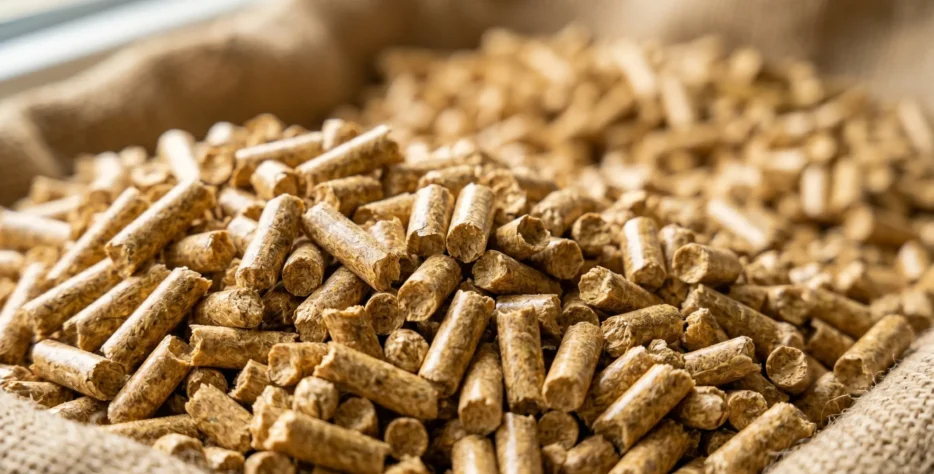
Bio Pellet Plant Design & Engineering – Multi-Feedstock Solutions
- Kiran Green Energy Solutions Private Limited designs, engineers, and commissions bio pellet plants from start to finish.
- Our plants run on more than one feedstock — Napier grass, crop residues, forest waste, bagasse, press mud, and others.
- We hand the plant over ready to run. You get the throughput you signed up for, sensible power bills, and pellets that hold together.
Why Multi-Feedstock Pellet Plants?
- Challenge
- Single-feedstock plants face supply disruptions
- Different materials require different processing
- Quality varies by season and source
- Our Solution
- Multi-feedstock design ensures uninterrupted production
- Flexible machinery with adjustable parameters
- In-line moisture control and densification systems
Our Services – Bio Pellet Plant Design
1. Feasibility & Feedstock Assessment
- We survey what biomass is actually available near your site — from farms, forests, or nearby industry.
- We work out which feedstocks can go through the line together.
- Every feedstock is tested for moisture, ash, and calorific value.
- From those readings we recommend the blend ratios that give you the best pellet for the least cost.
2. Complete Plant Engineering
- Capacity from 2 to 20+ tons per hour.
- Core equipment, designed in-house:
- Hammer mills (for multi-feedstock grinding).
- Rotary drum dryers (moisture control from 50% to <12%).
- Pellet mills (heavy-duty, wear-resistant dies).
- Coolers, screener, and dust collection systems.
- Automated bagging and weighing lines
3. Multi-Feedstock Processing Capability
Our Plants Handle: Feedstock Processing
| Feedstock | Moisture at Intake | Final Pellet Moisture | Pellet Diameter |
|---|---|---|---|
| Napier grass | 50-55% | 8-12% | 6–12 mm |
| Rice husk | 10-12% | 8-10% | 6–8 mm |
| Bagasse | 45-50% | 10-12% | 8–10 mm |
| Sawdust | 35-40% | 8-10% | 6 mm |
| Press mud | 60-65% | 10-12% | 8–12 mm |
| Groundnut shells | 10-15% | 8-10% | 6–8 mm |
4. Key Design Features Our Standard
- Low-temperature drying. It uses less fuel and doesn’t burn off calorific value the way hot drying does.
- Magnetic separators and screening stations to catch stones, metal, and other contaminants before they reach the mill.
- Variable-speed feeders so two or three feedstocks blend evenly instead of pulsing through.
- Conditioning chambers for uniform moisture and temperature.
- PLC/SCADA-ready control panel with real-time monitoring.
- Dust extraction and fire suppression built in from the start.
5. Pellet Quality Parameters (Guaranteed)
Our Pellet Quality Standards
| Parameter | Our Standard |
|---|---|
| Pellet density | 600–700 kg/m³ |
| Durability index (PDI) | >97.5% |
| Moisture content | 8–12% |
| Calorific value | 16–18 MJ/kg |
| Ash content | <10% (feedstock dependent) |
| Fines percentage | <2% at delivery |
6. Our End-to-End Execution Model
Project Execution Phases
| Phase | Deliverable |
|---|---|
| Design | Plant layout, P&ID drawings, equipment specification |
| Selection Support | All machinery (hammer mill, dryer, pellet mill, cooler, bagging line) |
| Installation | Civil guidance, equipment erection, electrical & automation |
| Commissioning | Dry run, wet run, trial with multiple feedstocks |
| Training | Operator training, maintenance schedule, safety protocols |
| Proactive Support | Spare parts supply, annual maintenance contract, remote support |
7. Why Partner with Kiran Green Energy Solutions Private Limited?
- We design for biomass that changes batch to batch, which is what you actually get in the field.
- We’ve run Napier grass, agro-residues, and industrial waste through real lines, so we know where they jam.
- Our pellets meet international standards for both industrial and home use.
- We don’t over-engineer. The design balances what you spend to build against what you spend to run it.
- One team carries the project from the first concept to the day the plant starts producing.
8. Where Our Pellets Are Used
- Industrial boilers, replacing coal or furnace oil.
- Co-firing at thermal power plants.
- Gasification for power generation.
- Heating for homes and commercial buildings.
- Animal bedding — low dust, high absorbency.